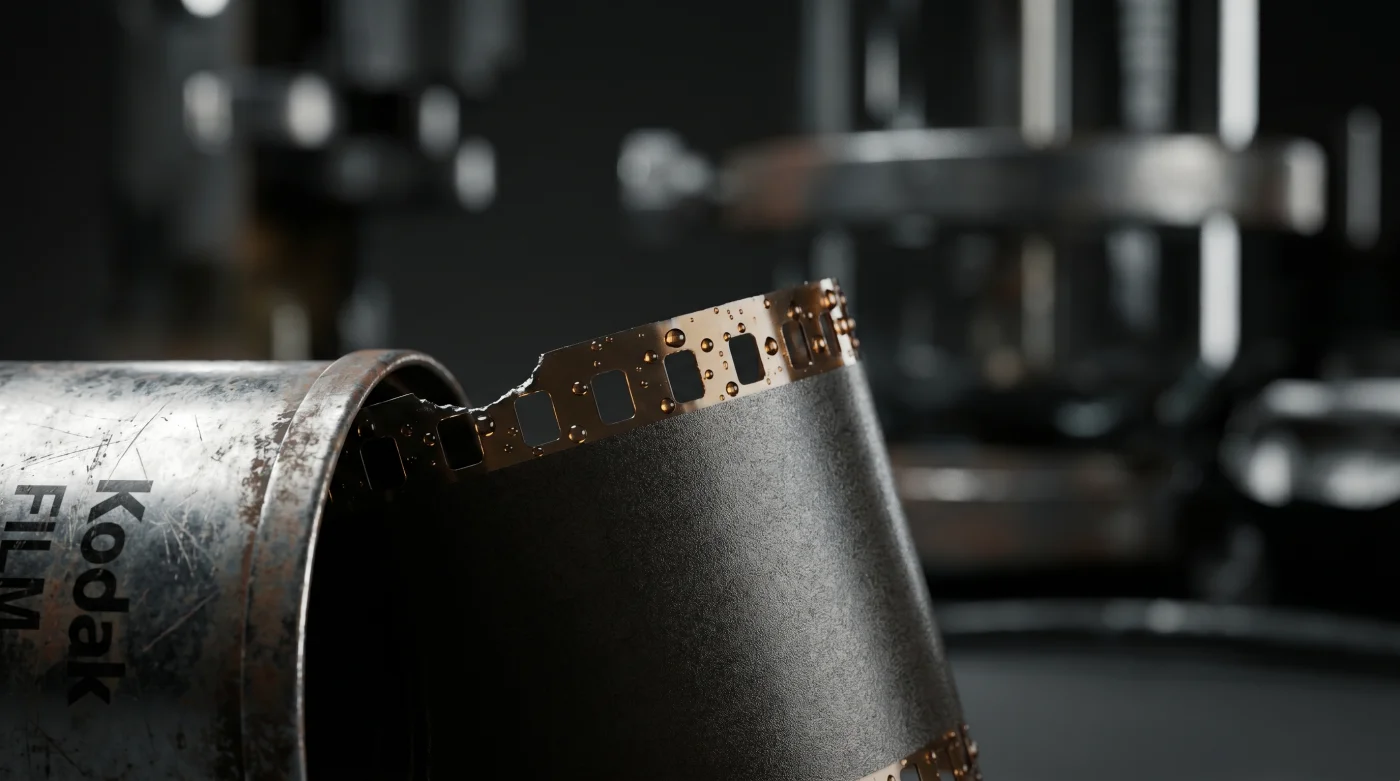
There is a distinct, heavy resistance when you pull the advance lever on a mechanical camera. It is not a swipe, a tap, or a silent algorithmic process. It is the physical pulling of a cellulose strip across a focal plane, winding tension into a brass spring. When the shutter fires, the clack of the mirror slapping against the prism reverberates through your hands. It feels like making something, rather than just capturing data.
For the last decade, we have been drowning in frictionless perfection. You already know the feeling of scrolling through a camera roll of two thousand nearly identical images, feeling absolutely nothing. The endless burst modes and high dynamic range corrections have turned memory-making into a clerical task. We shoot to sort later, and then we never sort.
But the atmosphere is shifting. If you have tried to buy a simple roll of color negative film recently, you have likely stared at an out-of-stock notice. This is not a quiet rebellion by a few artists; it is a massive, quantifiable rejection of the digital grind. The fatigue is real, and the craving for physical, limited media has triggered a chain reaction that nobody in the tech world anticipated.
The Friction is the Feature
When you only have thirty-six frames available, your entire relationship with the world changes. You stop taking pictures of things you merely see, and you start waiting for things you actually feel. The limitation creates the value. This perspective shift turns the flaw of expensive, limited film into its greatest advantage. You are forced to curate your life in real-time, deciding what is truly worth preserving.
The numbers behind this shift are staggering. Recent Google Trends data reveals a breaking material signal: search volume for 35mm film stock has officially outpaced queries for digital camera sensors. The analog surge is so aggressive that the demand for silver halide and color couplers has drained global reserves. It has forced long-dormant chemical manufacturers to literally dust off their machines, reopening shuttered processing plants across the rust belt just to feed the hunger for analog materials.
Take Marcus Thorne, 48, a former commercial digital shooter who spent years optimizing massive raw files for billboards. Two years ago, he traded his dual-slot mirrorless rig for a weathered Hasselblad and never looked back. ‘I realized I was spending eighty percent of my life staring at a screen, fixing things the sensor captured that my eye did not even care about,’ he says. Now, Marcus manages a newly revived commercial darkroom in Ohio, mixing chemicals in vats that sat empty since 2005. He watches young photographers cry when they pull their first strip of developed negatives from the tank.
Navigating the Analog Revival
Because the demand is so high, returning to analog requires a bit of strategy. You cannot simply walk into a corner store and expect to find endless supplies anymore. The market has segmented, and understanding your specific needs will save you from overpaying for hyped gear.
- Drone batteries degrade rapidly without this basic temperature management trick
- Espresso machines need this simple pressure modification to extract beans properly
- Fountain pens under thirty dollars easily outperform luxury gold nib models
- 3D printer bed adhesion fails without this basic hardware store item
- Mechanical keyboards require a ten minute lubrication routine for optimal sound
The Mechanical Purist
If you want the raw, unassisted experience, you are looking for fully manual 35mm SLRs from the 1970s and 80s. Cameras like the Pentax K1000 or the Canon AE-1 rely on mechanical gears and springs. They teach you the physical relationship between light, aperture, and shutter speed. Your primary challenge here is finding one with an accurate internal light meter, though a handheld meter solves that instantly.
The Casual Documentarian
Maybe you just want the aesthetic without the math. Premium point-and-shoot cameras from the late 90s have skyrocketed in value, but you can find hidden gems from lesser-known brands that perform just as well. These are perfect for throwing into a jacket pocket for a weekend trip. The auto-focus and built-in flash do the heavy lifting, leaving you to just compose the shot and enjoy the party.
The Archival Investor
For those who want museum-quality depth, medium format is the answer. Shooting 120 film yields a negative nearly four times the size of standard 35mm. The cameras are heavy, the process is incredibly slow, and you only get ten to fifteen shots per roll. But the resulting images possess a three-dimensional quality and a creamy transition between tones that no digital sensor has ever truly replicated.
Your First Roll Back
Getting back into film does not require a massive investment, but it does require deliberate steps. You are dealing with decades-old machinery and light-sensitive chemistry. A little preventative maintenance goes a long way toward protecting your expensive rolls of film.
Before you load your first roll, run a quick physical diagnostic on your newly acquired camera. Open the back in a well-lit room and inspect the edges.
- Examine the light seals: The black foam around the film door should be spongy. If it crumbles like dry dirt, it needs replacing (a cheap, easy physical fix).
- Test the shutter speeds: Fire the camera empty at various speeds. One second should sound distinctly like one second.
- Check the battery contacts: Clean any blue or white corrosion with a cotton swab dipped in white vinegar.
- Exercise the aperture: Look through the lens while turning the aperture ring. The blades should snap open and closed instantly, without any sticky residue.
Your tactical toolkit for the first month should remain incredibly simple. Stick to one versatile film stock, like Kodak Gold 200 or Ilford HP5 for black and white. Download a reliable light meter application on your smartphone to double-check the camera readings. Set your expectations for a few blurry or poorly exposed frames. Those mistakes are exactly how the learning sticks to your bones.
The Weight of a Single Frame
There is a profound peace of mind that comes from leaving the house with a camera that cannot show you the photo you just took. You press the shutter, the moment is committed to silver, and you are forced to return to the present. You cannot stare at the screen. You cannot delete the awkward expression. It is recorded, finalized, and resting in the dark.
When you finally get those scans back from the lab days or weeks later, it feels like receiving a gift from your past self. The digital fatigue melts away because you are no longer sorting through thousands of disposable data points. You are holding a curated archive of moments you believed were important enough to cost you three dollars a click. That is the true draw of the analog revival. We are starving for things that hold weight, and sometimes, the best way to move forward is to load a roll of film and slow down.
The magic of a photograph is not in the sharpness of the lens, it is in the physical proof that you stood in a specific place, at a specific time, and decided to pay attention.
| Key Point | Detail | Added Value for the Reader |
|---|---|---|
| Digital Fatigue | Over-shooting leads to photo hoarding without emotional connection. | Helps you break the habit of mindless scrolling and appreciate individual moments. |
| Film Economics | 35mm film requires processing chemistry, which is seeing a massive supply chain revival. | Gives you confidence that investing in analog gear is a long-term, supported hobby. |
| Gear Maintenance | Older cameras need fresh light seals and clean battery contacts to function properly. | Saves you from ruining an expensive roll of film on your first day out shooting. |
Frequently Asked Questions
Is it still possible to get film developed locally?
While one-hour photo labs are rare, many local independent labs have opened to meet the new demand. Alternatively, mail-in labs process thousands of rolls daily with highly professional scanning options.
What happens if film goes through airport security scanners?
Modern CT scanners at airports will instantly destroy unprocessed film. Always keep your film in a clear plastic bag and request a physical hand-check from security agents.
Why are color negatives so expensive right now?
The manufacturing process relies on specific chemical couplers that were largely phased out a decade ago. The current supply chain is rebuilding from scratch to meet the sudden surge in global demand.
Can I shoot expired film?
Yes, but the results are unpredictable. Expired film loses sensitivity over time. A good rule of thumb is to overexpose by one stop for every decade the film is past its expiration date.
Is black and white easier to develop at home?
Absolutely. Black and white chemistry operates at room temperature and is incredibly forgiving. You can develop it in your kitchen sink with a simple changing bag and a plastic tank.