The afternoon heat radiates off the asphalt as you pack away your gear. The motors of your quadcopter are still ticking slightly as they cool, the plastic props dusted with dried grass. A sudden rain shower forced you to land early, leaving three of your lithium-polymer packs sitting heavy in your bag, still holding a ninety-percent charge. You zip the case shut, toss it into the trunk, and drive home, figuring you will just use them next weekend.
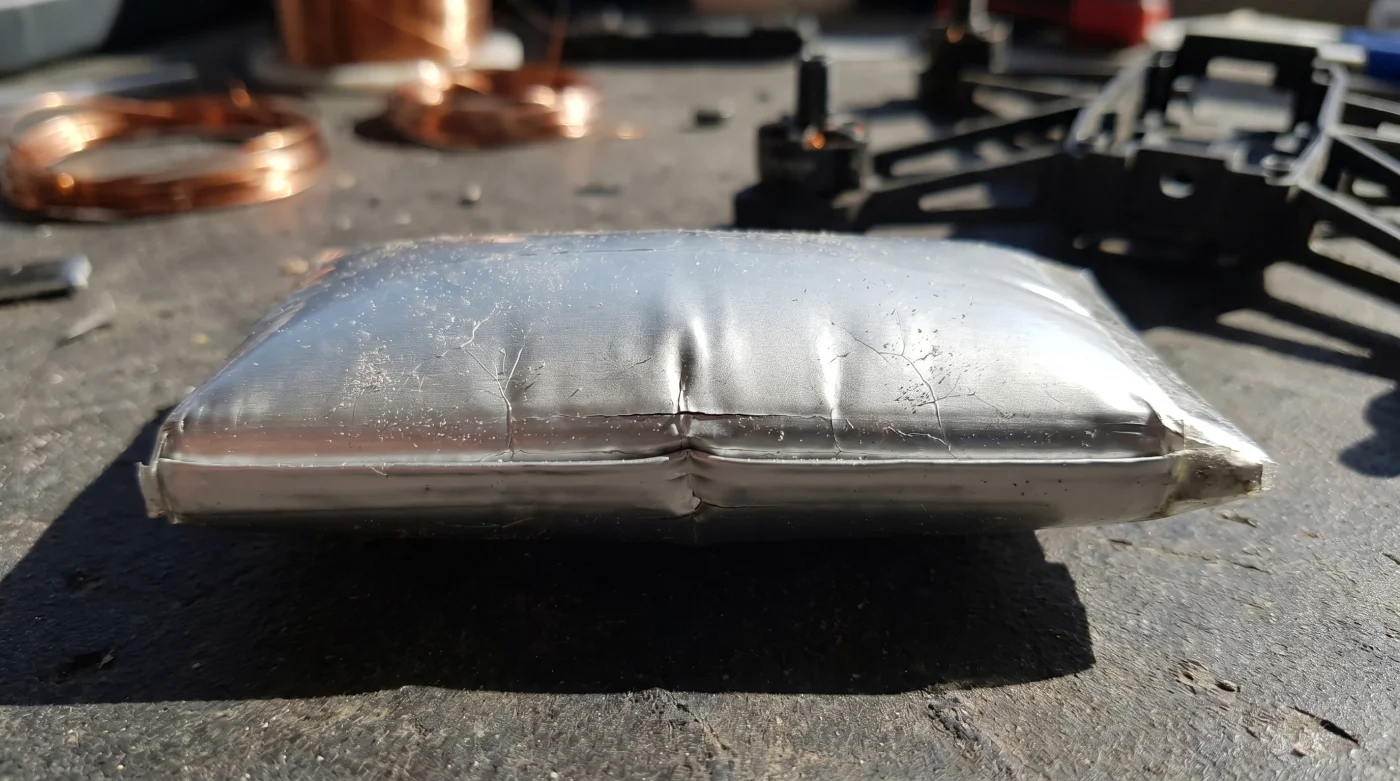
Months pass before the weather clears up enough for another flight. When you finally pull those grey plastic blocks out of your storage bin, they do not fit into the battery tray. The hard casing is taut, swelling outward like a strained balloon. This is the quiet death of high-performance electronics, happening silently in the dark corner of your closet.
The natural instinct is to blame the manufacturer or assume you purchased a defective batch. You likely brush it off as the cost of participating in modern aerial photography, assuming that batteries simply have a brutal expiration date. But the failure of these expensive power sources is rarely a manufacturing flaw; it is a fundamental misunderstanding of chemical stress.
You see, a fully charged lithium-polymer cell is not resting. It is entirely saturated with energy, fighting against its own internal resistance. Leaving them fully charged degrades their chemical capacity over time, suffocating the internal structure until the physical cell begins to fail.
The Coiled Spring in Your Gear Bag
Think of a LiPo battery not as a gas tank that sits comfortably full, but as a heavy metal spring. When you charge it to one hundred percent, you are compressing that spring down as tight as it will go, locking it in a state of maximum mechanical tension. If you leave a spring compressed for a few hours, it bounces back perfectly.
If you leave that spring compressed for three weeks in a warm room, the metal fatigues. When you finally release it, it never quite returns to its original shape. The tension destroys the elasticity, just as the electrical saturation destroys the delicate lithium chemistry inside your power packs. Heat accelerates this exhaustion, acting as a catalyst that turns a mild chemical strain into a swelling, volatile hazard.
This is where the industry’s most frequently forgotten tool comes into play. It is not an expensive cooling locker or a complicated software suite. It is a fifteen-dollar smart discharger, a tiny piece of plastic that does one incredibly specific job: bleeding off excess tension.
When you plug your unused pack into this simple cell balancer, it acts like a pressure valve. Discharging to storage voltage prevents permanent cell swelling and failure. By simply dropping the internal voltage down to around 3.8 volts per cell, you release the spring, allowing the battery to breathe comfortably on the shelf.
- Espresso machines need this simple pressure modification to extract beans properly
- Fountain pens under thirty dollars easily outperform luxury gold nib models
- 3D printer bed adhesion fails without this basic hardware store item
- Mechanical keyboards require a ten minute lubrication routine for optimal sound
A Hard Lesson in the Florida Heat
Marcus Thorne, a forty-two-year-old commercial drone operator based out of Orlando, learned this the expensive way. Running daily real estate mapping flights in the humid, ninety-degree air, Marcus was burning through a fresh set of expensive batteries every three months. He assumed the blistering ambient temperature was simply cooking his gear from the outside in.
His routine involved charging a dozen packs every night to ensure he was always prepared for sunrise shoots. If a flight was canceled, those packs sat fully loaded in the trunk of his car. Heat amplifies chemical degradation, and Marcus was inadvertently building the perfect environment to execute his lithium cells. It wasn’t until a veteran remote-control airplane mechanic handed him a dusty, cheap voltage checker and explained the concept of storage mode that his failure rate dropped to zero.
Adjusting for Your Flight Rhythm
Every pilot has a different cadence. You cannot treat your gear the same way a daily commercial operator does if you only fly on clear Sundays. Adapting this chemical reality to your personal schedule is how you stop wasting money on replacement parts.
For the weekend flyer, your routine requires strict boundaries. If you finish flying on a Sunday afternoon and do not plan to put the drone in the air by Wednesday, your remaining packs must be brought down to a resting state. Do not let them sit with a full payload of energy for more than forty-eight hours. Hook them up to your discharger as soon as you walk through the front door.
For the daily cinematic pilot, the rules bend slightly but remain rooted in temperature management. If you are cycling through your equipment every single day, you do not need to drop them to storage voltage every night, as the natural rotation keeps the chemistry active.
However, you must let them cool completely before placing them back on the charging hub. Pushing fresh current into a battery that is still warm from the sky is a recipe for internal scarring. Wait for room temperature before you begin the recharge cycle. A cool cell accepts energy smoothly; a hot cell fights it.
For the seasonal flyer, who packs the drone away for the long winter months, neglect is the primary enemy. A battery left in storage mode will slowly lose voltage over time due to natural internal resistance.
If a cell drops below 3.0 volts, the chemistry crystallizes, permanently blinding the battery’s ability to hold a charge. Set a monthly calendar reminder to plug in your voltage checker. If the cells have dipped below 3.8 volts, pulse them with a short charge to bring them back up to that safe, resting baseline.
The Three-Minute Storage Ritual
Integrating this habit into your life does not require hours of technical tinkering. It is a mindful, minimalist routine that demands exactly three minutes of your attention after you return from the field.
Rather than dumping your gear into a dark corner, set up a designated space on a cool, shaded desk. Treat the unpacking process as a careful cooldown for your tools. Respecting the physical hardware ensures it will perform flawlessly the next time you need it.
Follow this simple tactical checklist to protect your investment:
- Check the ambient temperature: Store your gear in a room that stays consistently around 65 to 70 degrees Fahrenheit. Avoid garages, car trunks, or sunny windowsills.
- Deploy the forgotten tool: Plug each unused battery into your smart discharger or cell checker.
- Set the target: Select the storage function, bringing the voltage to a resting 3.8 volts per cell.
- Store safely: Place the neutralized packs in a fire-proof LiPo bag, knowing they are chemically relaxed and stable.
Finding Peace in the Routine
It is easy to view battery management as just another frustrating chore attached to a hobby that is supposed to be freeing. You bought a drone to capture the quiet beauty of a mountain ridge at dawn, not to babysit voltage readouts in your living room. Protecting your peace of mind is the true goal of this minor maintenance task.
When you hike three miles up a steep trail with fifty pounds of gear on your back, you need absolute certainty that your equipment will wake up when you push the power button. You eliminate the nagging doubt that your battery might drop from fifty percent to zero while hovering over a river.
A battery allowed to rest properly is a battery you can trust. It will hold its charge longer, provide consistent power under heavy acceleration, and outlast its expected lifespan by years. By treating your equipment with a little basic empathy, you trust your aerial tools to remain steadfast, ensuring your focus stays entirely on the sky.
A lithium-polymer battery at full capacity is fighting a constant battle to expand. Letting it rest at storage voltage is like letting it exhale, preserving its lungs for the next flight.
| Key Point | Detail | Added Value for the Reader |
|---|---|---|
| Storage Voltage | Bleeding cells down to 3.8V when not in use for 48 hours. | Prevents irreversible swelling and doubles the lifespan of expensive battery packs. |
| Temperature Control | Keeping cells between 65°F and 70°F, away from direct sunlight. | Stops heat from acting as a catalyst for chemical degradation inside the plastic casing. |
| Cool-Down Period | Allowing a flown battery to rest before placing it on the charger. | Prevents internal scarring and ensures a smooth, safe absorption of electrical current. |
Frequently Asked Questions
Can I store my drone batteries in the refrigerator to keep them cool?
No. The extreme cold and potential for condensation will damage the internal chemistry and rust the contacts. A cool, dry closet inside your home is much safer.How long does it take for a fully charged battery to start taking damage?
While a few days will not cause immediate swelling, leaving a battery at 100 percent for over a week begins a slow, irreversible chemical degradation process. Discharge them if you are not flying within 48 hours.Do smart batteries discharge themselves automatically?
Many modern drone batteries have an auto-discharge feature, but relying solely on this is risky. The internal board generates heat while discharging, and if the battery is packed tightly in a foam case, that trapped heat can cause the very swelling you are trying to avoid.Is it safe to fly a battery that has slightly puffed up?
Never fly a swollen battery. Swelling indicates that the internal layers have separated and are producing volatile gas. It is a severe fire hazard and will suddenly drop voltage mid-flight, causing a crash.What is the best way to dispose of a ruined drone battery?
Discharge it completely to 0 volts using a specialized discharger or a saltwater bath, tape the connectors, and take it to a local electronics recycling facility. Never throw it in the regular household trash.