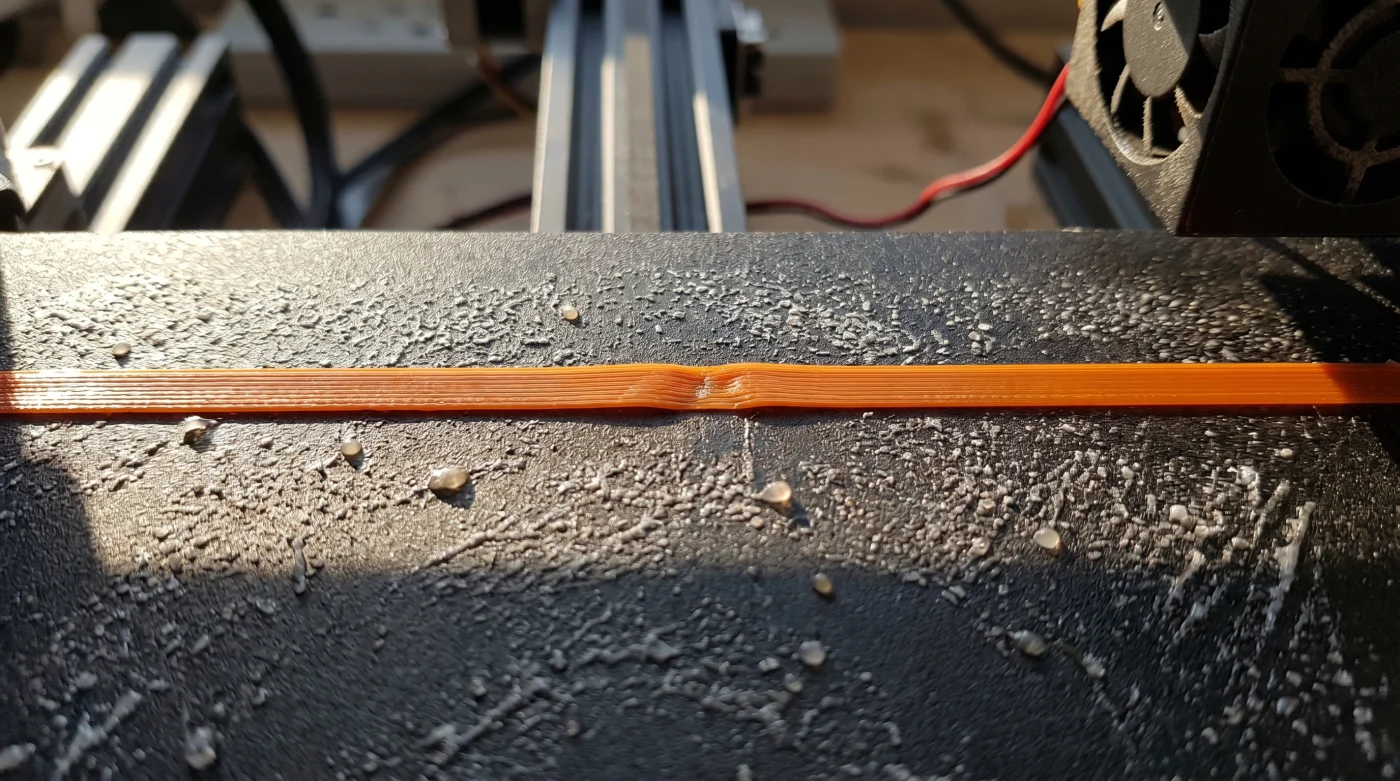
The steady hum of the stepper motors fills the quiet room, carrying the faint, sweet smell of melting PLA. You watch the brass nozzle glide gracefully across the glass, laying down the molten plastic like icing on a warm cake. The rhythmic mechanical sounds become a kind of white noise. Everything feels perfectly calibrated until you hear that sickening, hollow pop from across the workbench.
You look over, and the edges of your fourteen-hour print are curling upward like a dry autumn leaf. The nozzle catches the hardened plastic on its next pass, knocking the entire piece off its axis and creating an immediate nest of wasted filament. The frustration is instantly recognizable to anyone who has spent hours tuning their machine with precision instruments.
Most manufacturer manuals suggest a clinical, sterile approach to this failure. You are told to re-level the bed with a thin sheet of paper, scrub the glass with high-percentage isopropyl alcohol, or invest in a forty-dollar specialty magnetic surface. What they carefully avoid mentioning is that standard build plates warp and lose their factory texture after roughly fifty hours of intense heat cycling.
The veterans of the craft do not waste their precious evenings endlessly scrubbing glass or throwing away heavy spools of ruined material. Instead, they bypass the expensive upgrades entirely, reaching for a forgotten tool that costs three dollars and sits quietly in the aisles of the local drugstore. They understand that the solution is not a permanent hardware change, but a chemical barrier.
Stop Fighting the Bare Glass
We treat a perfectly clean build plate as the ideal canvas for molten plastic, but that expectation is fundamentally flawed. Think of extruding hot filament onto a smooth, heated bed like trying to build a heavy sandcastle on a polished mirror. The material simply has nowhere to anchor its weight as it cools and contracts. You are not trying to make the glass inherently sticky; you are trying to provide a sacrificial microscopic scaffolding.
This is where the magic of cheap, extra-hold hairspray comes into play. By misting the plate, you are laying down a complex web of thermal polymers. It creates an unbreakable grip while the bed remains at a steady 140 Fahrenheit. As the glass eventually cools down to room temperature, those same polymers naturally shrink and release the print with a satisfying click, leaving the glass completely unharmed and ready for the next project.
Marcus Vance, a forty-two-year-old prop maker from Ohio, learned this after nearly losing his sanity over a shifting helmet piece. He had spent eighty dollars on a textured PEI sheet, only for the corners of his massive print to lift aggressively after twelve hours of flawless extrusion. In a moment of desperation, he walked to the corner hardware store, bought a generic aerosol can of extra-hold hairspray, and coated his scratched, original glass bed. He quickly realized that the industrial adhesives in the cosmetic spray performed identically to specialized 3D printing glues, saving his massive cosplay project and his studio budget. It became his workshop’s most reliable tactic.
Adapting the Method for Your Craft
Not every filament requires the exact same treatment, and understanding how to adjust this simple tool changes how you approach different materials. The way you apply the spray dictates the success of your specific project, turning a one-size-fits-all hack into a tuned instrument.
For the Weekend Prototyper
If you are pushing out chunky mechanical gears and structural brackets in PETG, you know the material tends to bond too well, occasionally taking sharp chunks of glass with it when you try to remove a piece. A light, single pass of hairspray acts as a protective barrier rather than an adhesive, preventing the stubborn PETG from fusing permanently to your plate and ruining your hardware.
For the Miniature Painter
Printing delicate, high-detail figures in standard PLA requires immediate, unforgiving adhesion. Your first layer is often a maze of tiny supports that can easily be knocked over by a passing nozzle. Three fine mist coats, allowing each layer to dry for thirty seconds in between, build a textured foundation that grips those tiny footprints like concrete poured over rebar.
For the Production Farmer
When you are running a machine back-to-back all week to fulfill orders, you do not have time to wash the plate between every single print. A fresh, quick burst of aerosol directly over the cooling footprint of the previous print rejuvenates the grip, allowing you to pop off one item and immediately start the next sequence without missing a beat.
Laying Down the Micro-Scaffold
Applying the spray requires a mindful, minimalist touch. You are not painting a wall; you are lightly seasoning a surface. Always remove the glass or magnetic plate from the printer first so you do not accidentally coat your delicate rubber belts and greased lead screws in adhesive residue over time.
Hold the aerosol can about eight inches away from the surface. Press the nozzle and sweep across the glass in one fluid motion, like breathing lightly across a cold windowpane. Less is always more here. A saturated bed will simply create a gummy mess that ruins the bottom finish of your print.
Follow these specific steps for the perfect application to ensure maximum reliability:
- Wash the plate thoroughly with warm water and basic dish soap to remove all natural finger oils.
- Dry it entirely with a clean, lint-free microfiber towel.
- Apply one sweeping mist of extra-hold hairspray from the left edge to the right edge.
- Place the bed gently back onto the printer and heat it to 140 Fahrenheit to bake the polymers into a tacky film.
Tactical Toolkit:
Optimal Bed Temperature for standard PLA: 140F
Optimal Bed Temperature for flexible PETG: 160F
Application Distance: 8 to 10 solid inches
Cure Time: 2 full minutes under active bed heat
The Quiet Confidence of a Solid Foundation
Mastering your first layer changes your entire relationship with the machine. You no longer have to stand over the printer with a flashlight, holding your breath nervously as the skirt lines go down. The familiar anxiety of walking away from a massive, multi-day project simply fades into the background.
When you trust your foundation, the craft becomes peaceful again. You are completely free to focus your mental energy on the design modeling, the meticulous painting, and the final assembly, knowing that the simple, inexpensive chemistry resting on your build plate is doing the heavy lifting for you.
The best upgrades are rarely found in a specialized catalog; they are often hiding in plain sight, waiting for someone to recognize their true utility.
| Key Point | Detail | Added Value for the Reader |
|---|---|---|
| The Forgotten Tool | Generic extra-hold aerosol hairspray | Saves $40+ on specialty beds and stops first-layer lifting. |
| Thermal Release | Polymers shrink at room temperature | Prints pop off naturally without scraping or gouging. |
| Protective Barrier | Prevents PETG from fusing to bare glass | Extends the lifespan of the original printer hardware. |
Frequently Asked Questions
Will this damage my heated bed over time?
No, the spray is completely water-soluble. A quick rinse with warm water and dish soap removes months of buildup in seconds, leaving your glass pristine.Do I need to clean the bed after every single print?
Not at all. You can usually get five to ten prints out of a single coating by just applying a tiny touch-up mist exactly where the previous print sat.What if my printer uses a flexible magnetic sheet instead of glass?
This method works beautifully on smooth magnetic sheets, providing that same reliable grip and protecting the surface from micro-tears.Does the brand of the spray matter?
Avoid anything with added oils, shine enhancers, or perfumes. The cheapest, stiffest extra-hold aerosol you can find works the best.Why is my print still peeling at the sharp corners?
Sharp corners cool faster than the rest of the print, causing the plastic to shrink and pull up. Try adding a brim in your slicer software to give those corners more surface area to hold onto the spray.